You probably experience it daily: The pressure on companies is increasing. Demographic change, skills shortages, and shifting values demand that you, as a manager or entrepreneur, actively shape the world of work more than ever before. In this dynamic phase, the...interpretation ofHR inINCompanies in the role of HR business partnersclearer and toa crucial factor for sustainable business success. It's about personnel. It's no longer just about administration and personnel files, but about creating an environment in which people can grow, feel comfortable, and achieve success together. Human Resources becomes a bridge between HR strategy and lived corporate culture.
The challenges at Human Resource Management and modern HR Strategy. They extend far beyond traditional HR topics. In times of New Work Automation and artificial intelligence are changing both the way we work and the expectations we have for leadership and collaboration. You might notice it yourself: Today, it's much more about meaning, values, diversity, and participation. Employees want to help shape things, not just participate. At the same time, AI is putting recruitment, personnel development, and even leadership tasks to the test, with opportunities but also risks.Therefore, today more than ever, HR needs a keen sense for cultural change, technological competence, and the ability to mediate between different generations, perspectives, and needs. This demands a completely new balance of strategy, empathy, and innovation – and HR work that boldly evolves and actively shapes these trends instead of merely reacting to them.
According to a projection published in early May 2023 by the Institute for Employment Research, the so-called labor force potential in Germany will shrink by 11.7 percent from 45.7 million to 40.4 million by 2060.
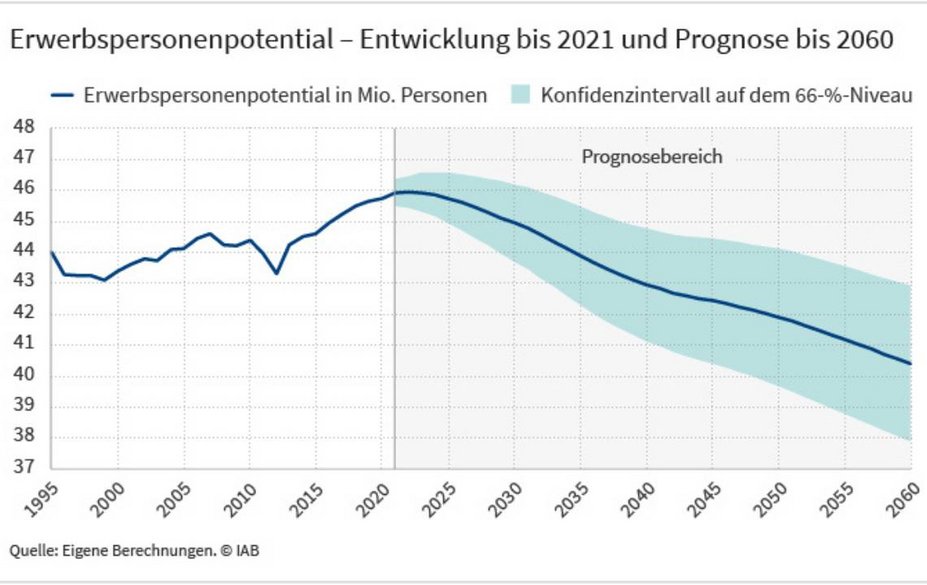
The stark figures from the IAB speak volumes: By 2060, Germany's potential workforce is expected to decline by 11.7 percent. That translates to millions of missing hands and minds. Companies that don't pursue a smart HR strategy today will struggle to find any staff at all tomorrow, let alone the best talent. This highlights the true importance of HR within a company: It's about the future viability of the entire business. We must lay the groundwork today to secure knowledge and attract and retain young talent early on.
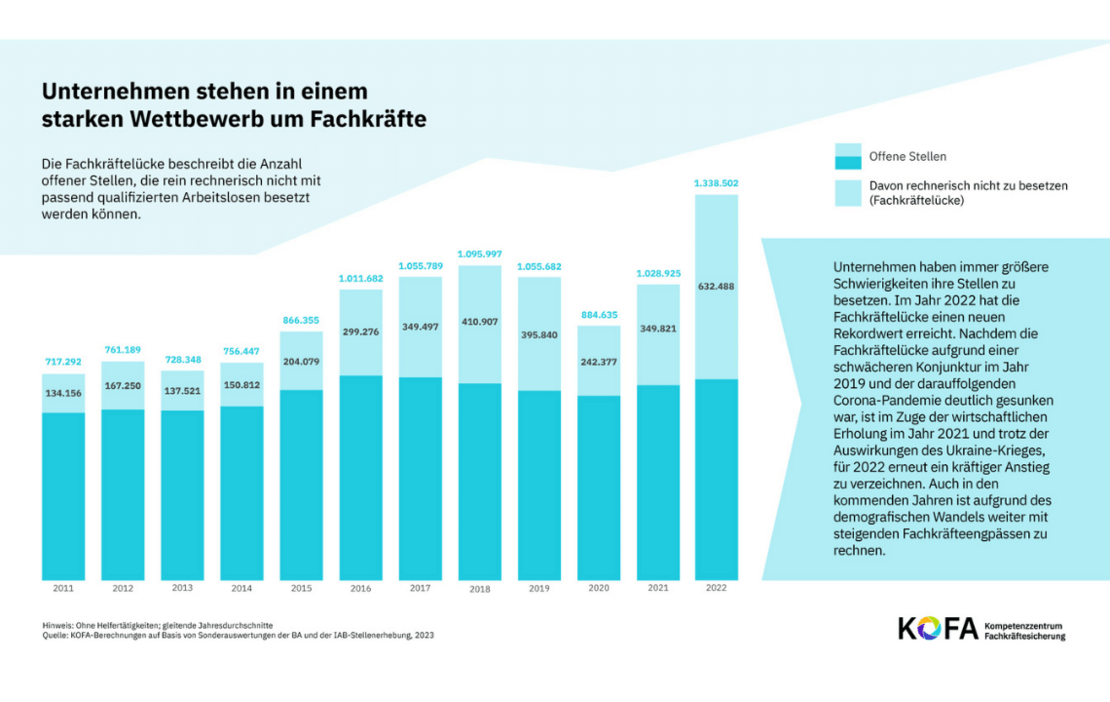
HR now acts as a driving force for transformation. Through proactive workforce planning and a modern corporate culture, it ensures Human Resources that the strategic goals of management can be implemented operationally by the right talent. Without a strong Human Resource Management growth plans are thwarted by a shortage of skilled workers.
An attractive employer brand attracts qualified employees and helps to stand out from the competition. However, the prerequisite for making a strong employer brand visible to the outside world is first of all to become aware of one's own characteristics and advantages of one's company. The more authentically one perceives and reflects on oneself, the more sustainably one can succeed in building and sharpening a strong employer brand and increase its radiance to the outside world.
Those who pretend to be something they are not will not be able to win over employees and certainly not retain them for long.
It is therefore often extremely helpful to design this analysis process together with HR. It is often extremely helpful to use the trained view of internal HR employees or - often even more effective due to their neutrality and experience - of external HR professionals and to jointly examine the company's own values, culture, processes, structures and goals. "Four eyes see more than two." Looking in one's own mirror often becomes easier when the counterpart takes a higher-level perspective, goes into depth at the right point and contributes to sharpening.
What defines strong recruiting today?? Strong recruiting combines the areas of job description, candidate search, application process, selection process, onboarding and feedback opportunities. Each individual step must be thoroughly adapted to the circumstances and concerns of the company in question.
Small businesses have different needs than large corporations. The important thing for everyone is that the process is clearly structured and transparent for everyone. The more guidance HR departments give applicants, the smoother the entire application process will be and the less likely it will be that accidental mistakes or delays will be noticed. It is equally important to pay special attention right from the start to the clear and precise formulation of job descriptions that correspond to the actual future tasks and do not represent a castle in the air. Honesty is an important factor for success, so that in the end those are found who really fit together.
And finally, strong recruiting also includes keeping the threshold of application activity as low as possible for the respective target group. It's not appropriate for every job to ask for an e-mail with all the application documents or to make interested parties spend fifteen minutes working through a highly complex application tool. Sometimes a phone number, a text or voice message via WhatsApp, or a message via social media is enough.
Today, the responsibility for initiating contacts lies largely with the companies, which requires a completely new approach and communication to attract the attention of job seekers and to enter into an exchange. Compared to classic patterns, this market cultivation is significantly more time-intensive and can only be mastered with a high level of expertise and niche knowledge.
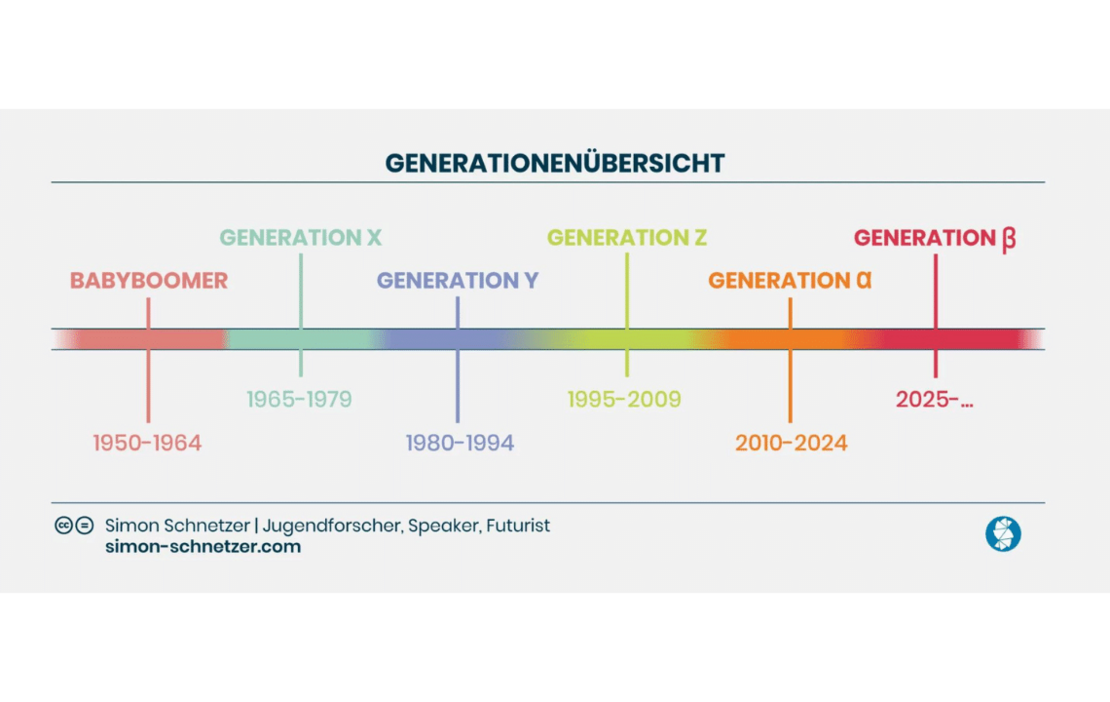
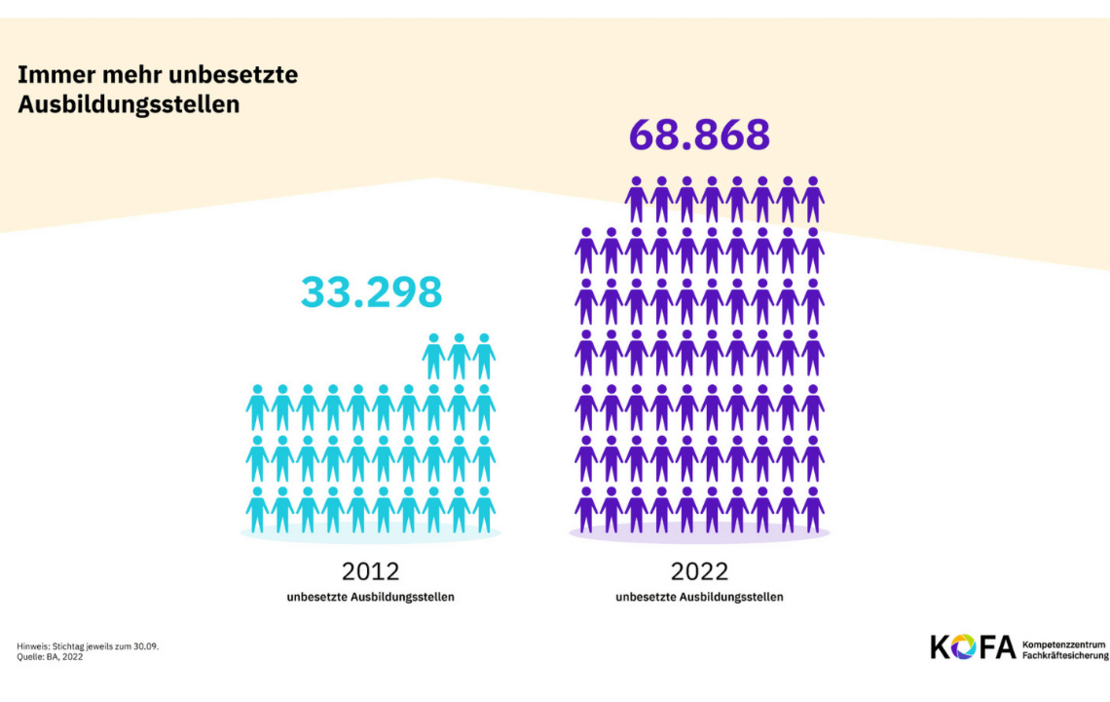
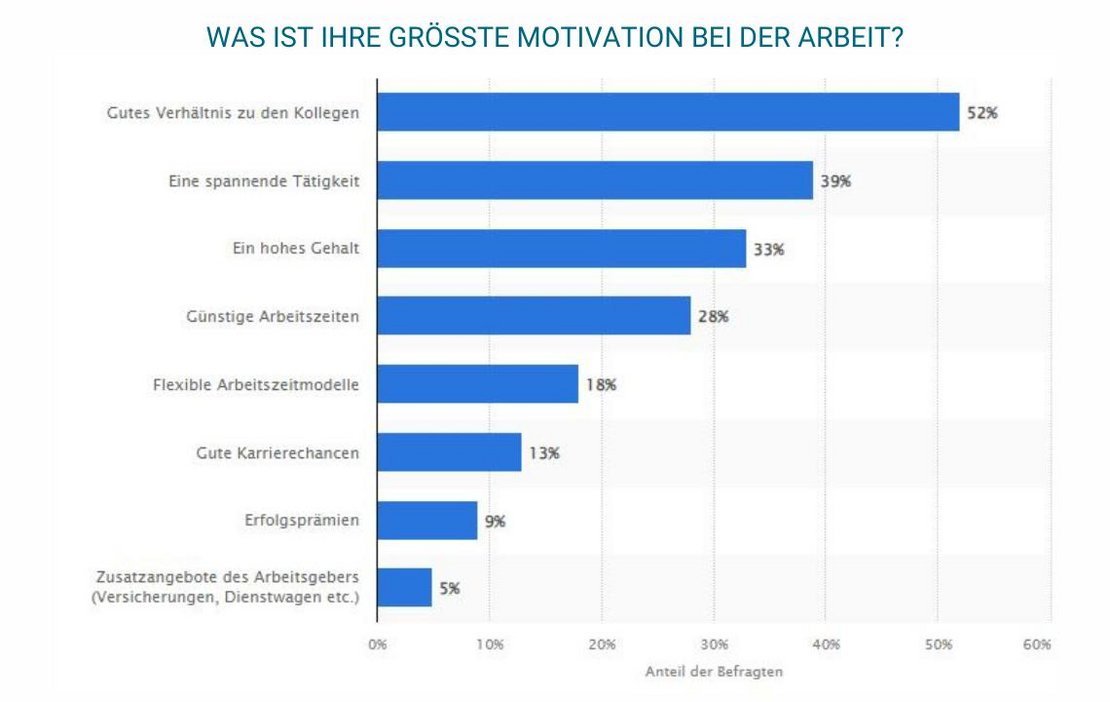
Especially the young people today have different values and perceptions of the working world differ from those of previous generations. A shift in values is taking place in the workplace, requiring employers and human resources departments to quickly rethink their strategies in order to attract the most suitable young talent. Job seekers can already choose between different employers and demand that their individual preferences be reflected in contract negotiations.
While company cars and high bonuses were once considered particularly attractive, today meaningful work, flexibility in working hours and location, and a healthy work-life balance are considered highly desirable. The pure performance principle with rigid standards is outdated and has given way to collaborative work methods and the pursuit of personal development in the workplace. This has made it necessary to offer a wide range of benefits that, taken together, form a comprehensive package that meets the needs of all employees.
It is a challenge to openly address the differences in work ethic and methods between the various generations and to leverage them for the benefit of the company as a willingness to change. When combining the strengths of the different generations...about the HR strategy. However, if successful, this contributes to the positive development of the company.
It is HR's role to support managers. In addition to their advisory function, they can develop workshops that ultimately ensure everyone has a place on the team where their strengths can be utilized, thus combining the experience of older generations with the ideas and skills of younger ones. There are no blueprints for this; only individualized support for company management and executives by HR can achieve the desired results.Human Resource ManagementState-of-the-art expertise, market knowledge, and coaching and consulting skills lead to results that are individually tailored to the company and promise success.
You can't do without employees. In any industry, even in times of AI systems, automation and robotics. People remain the most important resource for companies and the heart of HR work. In times of skills shortages and demographic change, it is therefore all the more important to retain existing employees and strengthen them for future challenges. Ideally, employees devote themselves to their tasks with motivation and curiosity, are open to change, eager to learn and adaptable. The more satisfied they are with their work, the better their work results and the contribution they make to the company's success.
Employee retention - or also Retention Management - therefore has the task of actively supporting each individual in his or her development and fulfillment and creating framework conditions, that create an optimal employee experience.
First of all, it is important to perceive the life situation of the employees. In the future, uniform standards should be flexibly adaptable to the individual circumstances of each person. After all, work - in contrast to the past - no longer takes precedence over everything else, but wants to be reconciled with the respective life situation. For some, it is important to work from a home office in order to ensure childcare or care for the elderly, while others want to work together spatially in order to exchange personal experiences and use the commute as a phase to switch on and off. Thirds prefer a mix of both. Flexible models cannot be found for every job. Services in medicine, elder care, crafts, retail and hospitality, for example, can be difficult to do from a home office. But even in these sectors, it's possible to think about flexible work schedules, childcare options, additional recreational opportunities and innovative monetary incentives, such as team bonuses, gift cards, meal vouchers or sports memberships. The more diverse the mix of offers, the better the individual needs of the workforce can be served and thus retention promoted.
In addition to the external framework conditions, the way in which employees interact with each other plays a particularly decisive role. After all, psychological well-being in the workplace is particularly dependent on cooperation with one another. If people support each other and actively address recognition and appreciation, this has a positive effect on the overall working atmosphere.
Today, it is important to build trust and reliability through honest communication, to establish constructive feedback not only sporadically but as a regular exchange format, and to live a positive culture of error that allows learning for everyone and sees it as part of human existence. Nobody is perfect, neither managers nor employees!
Employees have long since ceased to be mere recipients of orders. No, self-determination and acting on one's own responsibility are more important than ever in many professional groups today. A code of values or ethics also plays a role here. After all, the question of the meaning of work - not only with regard to the environment, sustainability or health - is omnipresent.
The use of collaborative work techniques, the integration of modern, partly agile leadership styles, new types of learning and education concepts, as well as personal training and coaching can help to promote co-determination and self-efficacy of each individual and to value and reward the respective support performance for the team to the same extent as the individual performance. After all, in an increasingly complex working world, teamwork is especially important!
Not only since the Corona pandemic has the focus on the topic of mental and physical health already been in the public eye. Nevertheless, the impact of the pandemic has caused a great acceleration of mindfulness towards the topic. For example, mental illnesses such as depression or anxiety disorders are no longer taboo topics, even in the workplace. On the contrary. The desire for a healthy working environment and preventive health care is omnipresent and is also expressed as a demand to employers.
While communication, team development and project management used to be at the forefront of company training programs, requests for resilience training and mindfulness formats are on the rise. This is often a challenge for small and medium-sized companies, as they do not have a human resources development department that develops training and prevention concepts for the workforce and implements them in-house.
What kind of prevention do I need to offer? Is an ergonomic workstation and a hazard assessment enough, or do I need to hold regular talks that also shed light on mental well-being? And am I allowed to do that at all?
For this, HR professionals and health service providers offer package solutions for manageable costs for consulting and implementation.
Especially in small and medium-sized enterprises (SMEs), administrative personnel resources are often scarce. Digital tools for personnel files, time tracking, and applicant management free up valuable time. This newly gained capacity can then be invested in strategic HR planning and individual employee support.
To efficiently manage an increased variety of tasks with limited resources, it is necessary to optimize HR processes and leverage digitalization to one's own advantage – to create a lean and efficient administration. A system-supported approach ensures adherence to standards and the transferability of work within the team, enabling, for example, the reliable handling of vacations, sick leave, and employee turnover, while simultaneously allowing work to be done from different locations.
Whether digital personnel files, time recording, certificate creation or applicant management - the variety of optimization options for workflows and HR topics is large. Even small improvements in processes can have a big impact, ensuring that HR work in small and medium-sized companies can withstand the demands of competition and at the same time free up resources for other HR tasks in your team.
HR professionals are needed to actively address the new challenges and create measures. So that everyone in the company can develop their full potential and make an efficient contribution.
HR professionals - both internal employees and external service providers - must specifically take on an active role with a 360-degree view for all stakeholders in the context of corporate management and offer themselves as providers of ideas for growth and change as well as sparring partners for executives and company owners. They have the urgent task of focusing the perspective on the manifold challenges of the changed working world, developing new concepts, adapting best practice examples to the respective company situations and steering the implementation of the measures. Every change offers the opportunity to realign and become better - above all with the necessary passion for human interaction.
It is not uncommon that the necessary internal resources are not available for this change. HR as a Service (HRaaS) is a solution that helps companies deal with HR challenges. By outsourcing HR processes to an external service provider like ARTS, you can save time, resources and costs without compromising the effectiveness and efficiency of your HR functions. By working with an experienced HR partner, you can ensure that your HR requirements are met professionally and reliably, in addition to extending the expertise of your own staff as the process progresses.
Sources:
IAB: https://iab.de/presseinfo/rueckgang-des-erwerbspersonenpotenzials-bis-2060-um117-prozent/